Buddhism & the Birthplace of Lord Buddha
Lumbini is where it all began — the sacred grove where Siddhartha Gautama was born more than 2,600 years ago. Staying at Lumbini Buddha Garden places you steps from the spiritual origin of one of the world's great traditions.
A Path Born in a Garden
In 623 BCE, in a tranquil grove of sal trees beside a clear pool, Queen Mayadevi gave birth to a prince named Siddhartha Gautama. That grove was Lumbini. The child would grow to renounce a life of royal comfort, seek the truth of human suffering, and — upon his awakening — become known as the Buddha, “the Awakened One.”
Buddhism is not built on the worship of a god, but on a practical path of ethical conduct, meditation, and wisdom. At its core are the Four Noble Truths — that life contains suffering, that suffering has a cause, that it can cease, and that there is a path leading to its cessation: the Noble Eightfold Path.
Today Lumbini is one of the four most sacred sites in Buddhism and a UNESCO World Heritage Site, drawing pilgrims, scholars, and seekers from every corner of the world to the very spot where the journey began.
The Four Holy Places
The Buddha himself named four places worthy of pilgrimage — marking his birth, enlightenment, first teaching, and passing.
Lumbini
Where Queen Mayadevi gave birth to Prince Siddhartha in 623 BCE, in the sal grove beside a sacred pool. Marked today by the Mayadevi Temple and the Ashoka Pillar.
Bodh Gaya
Where Siddhartha attained enlightenment beneath the Bodhi Tree after years of seeking, becoming the Buddha — 'the Awakened One'.
Sarnath
Where the Buddha delivered his first sermon, setting in motion the Wheel of Dharma and establishing the path he had discovered.
Kushinagar
Where the Buddha passed into final nirvana at the age of 80, completing his earthly journey and teaching.
Sacred Sites Within Lumbini
The Lumbini complex spans more than three square kilometres of monasteries, monuments, and gardens — most within a short walk or cycle from our resort.
The Sacred Mayadevi Temple
The spiritual heart of Lumbini, built over the exact spot of the Buddha's birth. Inside lies the marker stone pinpointing the birthplace and the ancient nativity sculpture depicting Queen Mayadevi.
The Ashoka Pillar
Erected by Emperor Ashoka in 249 BCE during his pilgrimage, its inscription is the earliest epigraphic evidence confirming Lumbini as the Buddha's birthplace.
The Sacred Pond (Puskarni)
The pool where Queen Mayadevi is said to have bathed before giving birth, and where the infant Buddha received his first purification bath.
The Monastic Zone
An expansive area of monasteries built by Buddhist nations around the world — Thailand, Myanmar, China, Germany, and many more — each in its own distinctive architectural tradition.
The Eternal Peace Flame
Lit in 1986 for the International Year of Peace, the flame burns continuously as a symbol of world peace radiating from the Buddha's birthplace.
The World Peace Pagoda
A gleaming white stupa built by Japanese Buddhists, standing serenely at the northern end of the Lumbini complex amid gardens and wetlands.
Meditation in the Spirit of Lumbini
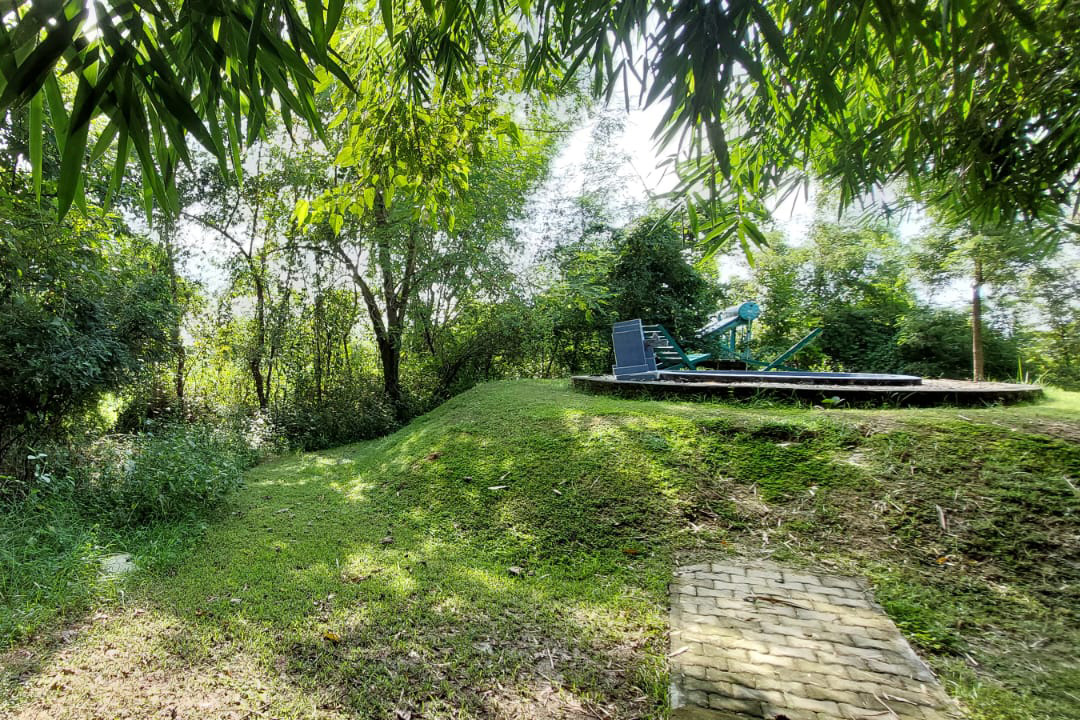
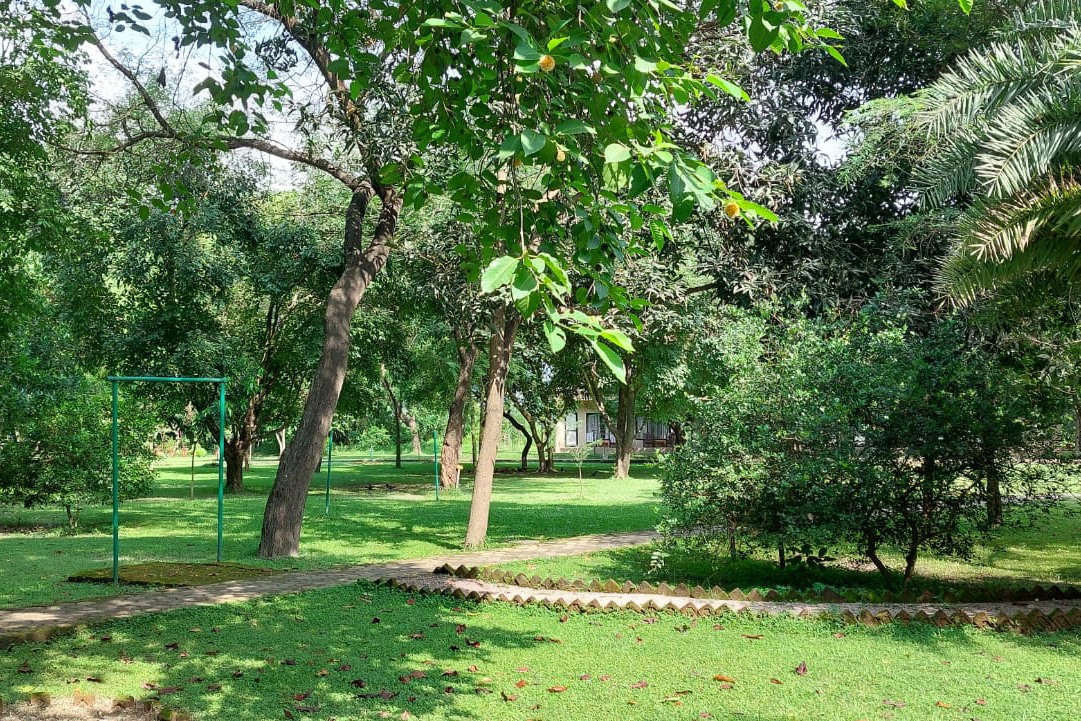
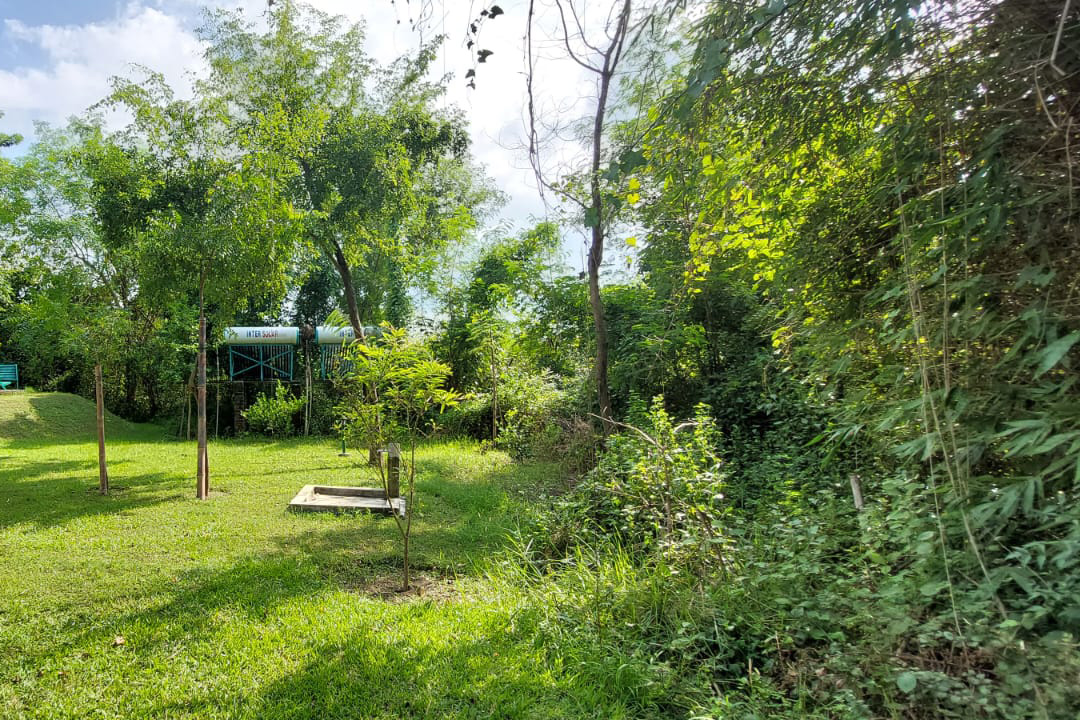
Lumbini Buddha Garden was designed to echo the sacred essence of the original grove. Our open gardens, gazebo, and quiet riverside paths offer a natural setting for meditation, yoga, and contemplation — far from the noise of the modern world.
Our mini library on Buddhism and nature, guided heritage excursions, and the simple rhythm of garden life make LBG an ideal base for pilgrims and curious travellers alike to deepen their understanding of the Buddha's path.