102 Bird Species in One Resort: A Raptor Researcher's Experience at Lumbini Buddha Garden
Most hotel reviews mention the pillows. Sandesh Gurung, raptor researcher and seven-time LBG guest, would rather talk about the White-rumped Vultures circling overhead at breakfast.
Why a Raptor Researcher Keeps Coming Back
This is Sandesh Gurung's seventh visit to Lumbini Buddha Garden.
Seven visits. By a professional raptor researcher who spends his life travelling Nepal in search of birds of prey. That number is not an accident — it is a verdict.
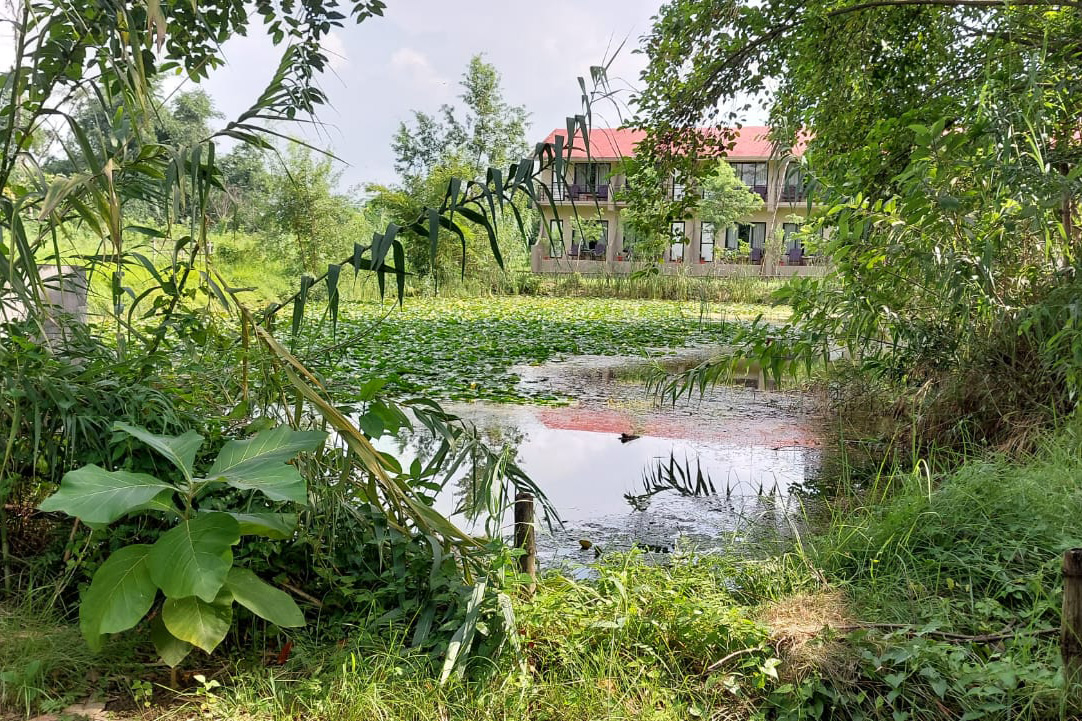
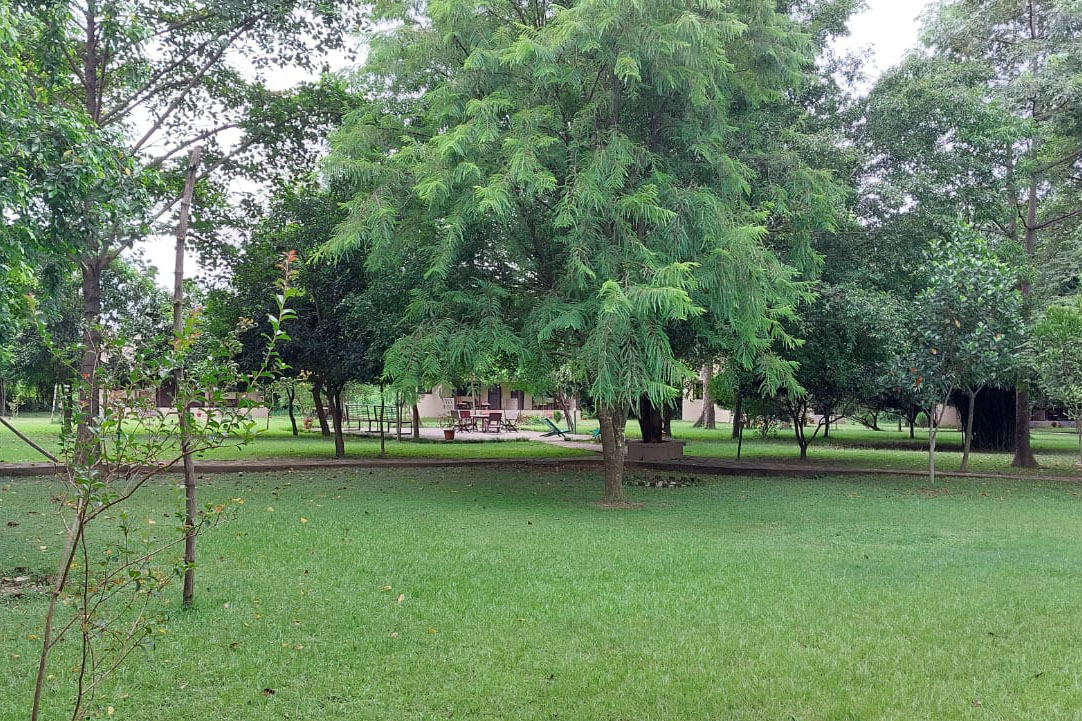
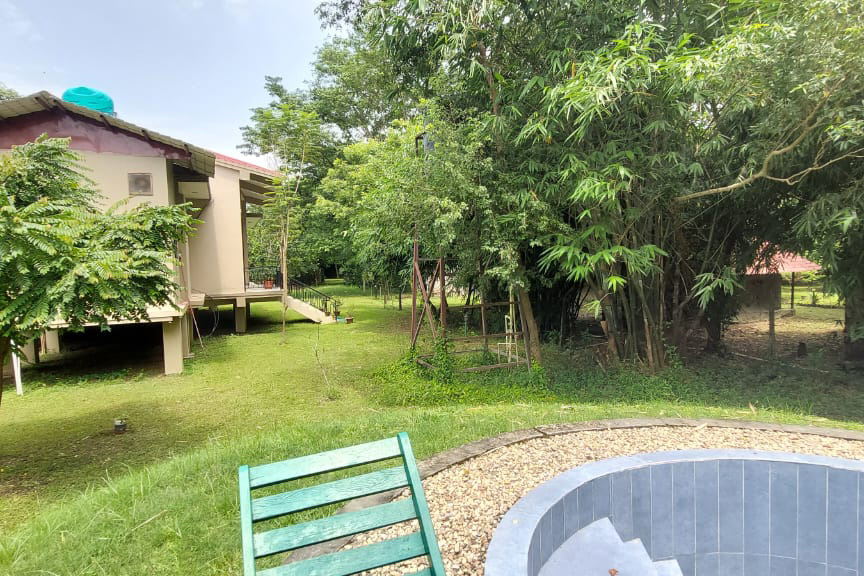
Lumbini Buddha Garden occupies a unique ecological position. Its semi-natural grounds contain a mix of:
- Grassland
- Waterholes
- Garden plantings (many specifically chosen to attract birds)
- Farmland at the perimeter
- Riparian scrub along the nearby Telar River
This mosaic of habitats in a single property creates what ecologists call edge habitat — the zone where different ecosystems meet, which consistently produces the highest bird diversity of any landscape type.
The Birds of LBG: What You Can Expect
Sandesh has recorded 102 species within the resort grounds alone — a figure that rivals dedicated bird reserves in many countries.
Year-Round Residents
These species can be encountered on almost any visit:
| Species | Habitat at LBG | Notable Behaviour |
|---|---|---|
| Sarus Crane | Farmland margins | Often seen in pairs; globally Vulnerable |
| Grey Francolin | Scrub and lawn edges | Feeds on insects at dawn |
| Jungle Babbler | Garden shrubs | Cooperative feeding of fledglings |
| Oriental Pied Hornbill | Tall trees | Distinctive calls carry across the garden |
| Common Kingfisher | Waterholes | Perches on low branches above water |
Seasonal Highlights
Winter visitors (October–March):
- Siberian Rubythroat — migrates thousands of kilometres to winter at LBG
- Indian Spotted Eagle — hunts farmland at the resort boundary; globally Vulnerable
- White-rumped Vulture — IUCN Critically Endangered; regularly soars overhead
- Egyptian Vulture — IUCN Endangered; uses thermal currents above the property
- Himalayan Vulture — impressive soaring bird; often seen with the above
"Rare Indian Spotted Eagle hunting in the farmland, IUCN threatened different species of vulture gaining height using thermal will surely amaze you." — Sandesh Gurung, Raptor Researcher
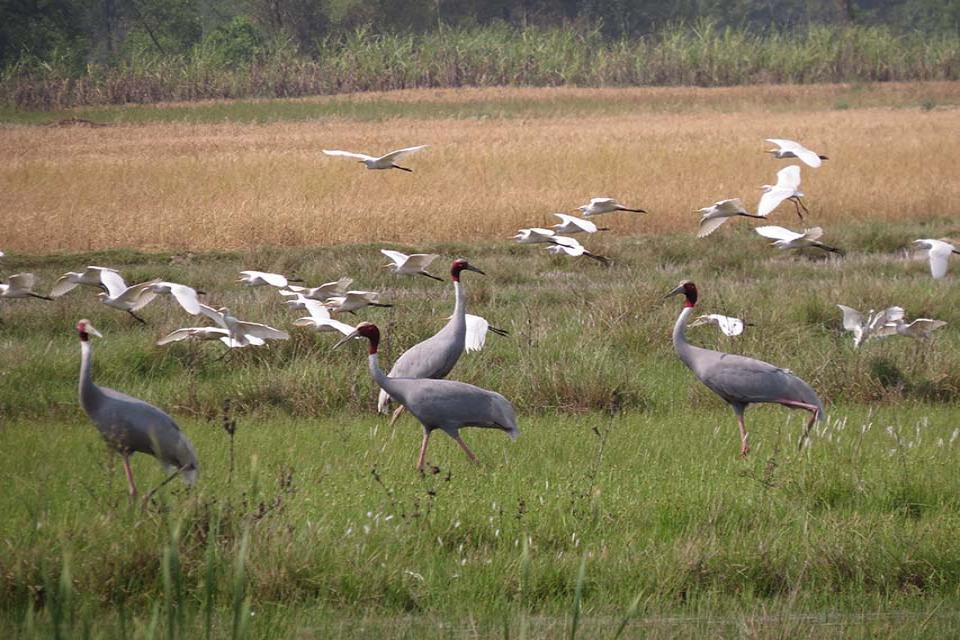
The Sarus Crane — the world's tallest flying bird — is frequently seen near LBG. Image placeholder: replace with resort-owned photo.
A Morning at the Resort: Dawn to Dusk
Waking Up at LBG
The alarm at Lumbini Buddha Garden is not mechanical. It's a chorus:
- Sunbird feeding from flowering plants just outside the window
- Red-vented Bulbul calling to a mate in the garden shrubs
- Sirkeer Malkoha vanishing into the undergrowth as you watch
- Woodpecker drumming a rhythm on a dead tree trunk — tock, tock, tock
- Indian Scops-owl finishing its night shift as the garden brightens
By the time breakfast is served, birdwatchers at LBG have typically already logged 20–30 species before touching their tea.
Breakfast With a Sarus Crane
The resort restaurant opens to the garden. Guests eating breakfast have reported a Sarus Crane standing just beyond the terrace — the tallest flying bird in the world, at eye level, while you eat.
This is not a zoo. This is not a managed feeding station. The birds come because the habitat welcomes them.
102 Species on the Property — A Selection of Highlights
Below is a curated selection from the 102 species recorded by Sandesh within LBG grounds:
Raptors (Birds of Prey)
- Indian Spotted Eagle (Vulnerable)
- White-rumped Vulture (Critically Endangered)
- Egyptian Vulture (Endangered)
- Himalayan Vulture
Waterbirds
- Sarus Crane (Vulnerable — main Nepal site)
- Common Kingfisher
- Purple Heron
Garden Birds
- Purple Sunbird
- Red-vented Bulbul
- Thick-billed Flowerpecker
- Greenish Warbler
- Hume's Warbler
Ground Birds
- Grey Francolin
- Jungle Babbler
- Sirkeer Malkoha
Mammals (Bonus)
- Nilgai (Blue Bull) — Asia's largest antelope; seen on farmland margins
- Terai Grey Langur — eats fruit in the resort garden
- Rhesus Macaque — active in the morning
The Afternoon and Evening: Even More to See
The birdwatching day at LBG does not end at noon. Sandesh recommends:
4:00 PM onwards — Walk the resort perimeter. As temperatures drop, ground birds emerge and raptors begin their pre-roost soaring.
Evening — Return to the dining hall and complete your species checklist. On a good day, crossing 70 species without leaving the property is entirely realistic.
"More than seventy species in a single day, without much effort — Wow!" — Sandesh Gurung
Night — Listen from your veranda. Indian Thick-knee and Indian Scops-owl call from the garden after dark. You won't need a torch — the calls come to you.
The Food, the Rooms, the Staff
Sandesh is a researcher, not a hotel reviewer. But his words are clear:
- Food: "Magnifico" — his exact word for the lunch. Organic produce grown on-site.
- Rooms: Spacious enough to encourage the afternoon nap he describes in vivid detail — the kind where you lie down for twenty minutes and wake up two hours later, completely restored.
- Staff: The hospitality is described as making guests feel they are at home. Seven return visits suggest this is not marketing copy.
👉 Explore our Cottage Room accommodation | View the Natural History Tour package
FAQs: Birdwatching at Lumbini Buddha Garden
How many bird species can I expect to see at LBG? With patience and an early start, 50–70 species in a single day is achievable within the resort grounds. A longer stay of 3–5 days regularly produces 100+ species including the surrounding farmland and nearby Jagdishpur Reservoir.
Do I need a guide to go birdwatching at LBG? The resort grounds can be explored independently. Guided birding excursions to Jagdishpur Reservoir (a Ramsar-designated wetland) and the Lumbini Sacred Garden ponds can be arranged through the resort.
What is the best time of year for birdwatching at Lumbini Buddha Garden? October to March brings the highest species diversity, with migratory raptors, wintering warblers, and the Siberian Rubythroat making their appearance. April and May are excellent for resident breeding species.
Is Nilgai (Blue Bull) really visible from the resort? Yes — the Nilgai is regularly sighted on the farmland adjacent to LBG's grounds, particularly in the early morning and late afternoon.
Can I bring binoculars and spotting scopes to the resort? Absolutely. The resort actively welcomes birdwatchers. Tripod-friendly outdoor areas are available, and the staff are familiar with birding guests' needs.
Written by Sandesh Gurung, Raptor Researcher, Lumbini, Nepal · Originally published September 2018 · Expanded and updated 2025